Is your backyard working as hard as your home’s interior? In Greater Heights, outdoor living is more than a nice-to-have. With long warm seasons and sudden showers, the right upgrades can add daily comfort and give your listing a clear edge. This guide shows you what local buyers look for, how to design for Houston’s climate, and the smartest projects to tackle before you sell. If you are shopping for a Heights home, you will also learn how to evaluate outdoor spaces with confidence. Let’s dive in.
Why outdoor living matters in the Heights
Houston’s humid subtropical climate delivers hot summers, mild winters, and frequent rain, which makes shade, airflow, and weather protection essential for outdoor use. You can verify the pattern in the Houston area’s local climate normals. Long warm seasons turn covered patios and outdoor rooms into real extensions of living space.
Buyer preferences back this up. National surveys consistently rank outdoor living features as highly desirable. You can see these trends in the National Association of Realtors reports and in Houzz outdoor living insights. In a walkable, lot-by-lot market like the Heights, listings with well-designed outdoor areas often stand out.
Plan for Houston conditions first
Heat, humidity, and storms
Greater Heights sits in USDA zones around 9a to 9b, which supports many subtropical and native species. Check the USDA Plant Hardiness Zone Map for details. Plan for intense sun, high humidity, and heavy downpours. Materials should resist moisture, UV exposure, and corrosion. Shade and airflow turn a beautiful space into a usable one from spring through fall.
Drainage and flood-aware design
Localized flooding can occur even if a property is not in a mapped floodplain. The Harris County Flood Control District shares practical guidance on grading, swales, and stormwater management that applies across the Heights. Review local resources from the Harris County Flood Control District and check parcel-specific risk on the FEMA Flood Maps before you invest.
Aim for positive grading away from the foundation, permeable surfaces where practical, and features like rain gardens, French drains, or bioswales to move water off hardscapes. Elevated or sloped patios can help keep water from the home.
Permits, utilities, and neighborhood controls
In the City of Houston, structural additions such as roofed patios, decks, and outdoor kitchens with gas, electrical, or plumbing typically require permits. Licensed trades must handle gas lines, electrical, and plumbing. Start with the City of Houston Permitting Center to confirm requirements for your scope.
Parts of the Heights are within historic districts or subject to deed restrictions. If your property is in one of these areas, visible exterior changes may need additional review. Check with the relevant historic commission or neighborhood association before you design or build.
Outdoor features Heights buyers love
Covered patios and outdoor rooms
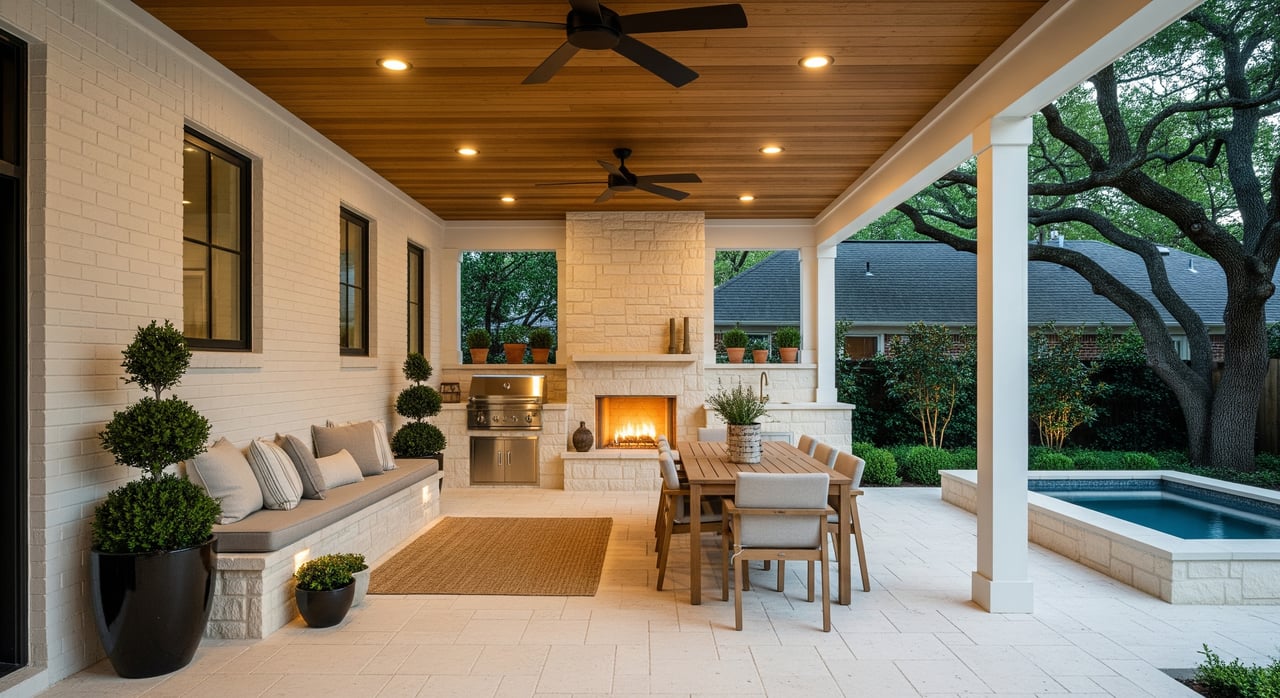
Covered patios are the most versatile outdoor upgrade in Greater Heights because they deliver shade, rain protection, and year-round usability. Think of them as an outdoor living room. Prioritize a solid roof or insulated cover over an open pergola if you want comfort in summer and shelter during storms.
Design for airflow with cross-ventilation and ceiling fans. Orient seating away from direct afternoon sun when possible. Where the patio meets the home, use proper flashing and create a slight slope to direct water away from the structure. For flooring, porcelain pavers, sealed concrete, or capped composite decking handle humidity and clean easily.
Material choices matter. Powder-coated aluminum or steel resists corrosion. If you love the look of wood, choose rot-resistant species like cedar or cypress and expect periodic sealing. Plan annual inspections of flashing, gutters, and finishes to stay ahead of Houston’s weather.
Summer kitchens built to last
Outdoor cooking is a lifestyle staple in the Heights, and a well-planned summer kitchen can elevate daily living and entertaining. Shade the cooking and prep zones, and include ventilation for built-in grills. Place the kitchen near your indoor kitchen for easy flow, while managing smoke with wind direction in mind.
Any gas, electrical, or plumbing lines require permits and licensed trades in Houston. Verify the plan with the city before you start. Stainless steel appliances and cabinetry, especially higher-grade options, hold up best in humidity. For counters, consider granite, quartzite, sealed concrete, or porcelain to handle heat and moisture. Keep surfaces clean, cover appliances when not in use, and allow space for servicing components.
Smart shade solutions
Shade is the comfort multiplier in our climate. Mature canopy trees like live oak, southern magnolia, or cedar elm provide long-term cooling and character, but always evaluate root zones, proximity to structures, and storm resilience. For species and placement, you can browse regional recommendations from Texas A&M AgriLife Extension and the Lady Bird Johnson Wildflower Center.
If you need shade now, engineered solutions offer quick relief. Consider aluminum patio covers, retractable awnings, pergolas with fabric panels, or tensioned shade sails. Combine fixed and flexible options so you can adjust shade season by season. Maintain trees with periodic pruning and clean gutters to reduce leaf buildup.
Drainage-friendly, low-maintenance landscaping
Buyers in the Heights pay close attention to how a yard handles water. Use rain gardens, shallow swales, and downspout routing to direct runoff into infiltration areas. Permeable pavers, gravel, or decomposed granite reduce ponding on paths and patios. For planting, choose native or adapted species that tolerate both heat and occasional wet periods. Guidance from the Harris County Flood Control District and Texas A&M AgriLife Extension can help you plan.
Reducing turf area can also cut mowing and irrigation needs. Meadow-style plantings, ornamental grasses, or mulched beds keep maintenance manageable. For mosquito control, avoid standing water, keep gutters clear, and use targeted drainage improvements.
Low-maintenance materials that win in Houston
Humidity, heat, and storms can be tough on finishes. Choose materials that are proven locally.
- Decking and flooring: Capped composites or PVC decking resist rot and warping. Porcelain pavers and sealed concrete are durable and easy to clean. Natural hardwoods like ipe are beautiful but require higher upfront cost and periodic care.
- Metals and appliances: Use higher-grade stainless, powder-coated aluminum, and marine-grade hardware. Avoid exposed raw steel.
- Fencing and screens: Aluminum or composite privacy systems stay straighter and cleaner than untreated wood in humid conditions.
- Coatings: Select exterior paints and sealers rated for high humidity and UV exposure. Use slip-resistant finishes on walking surfaces.
- Patio cover roofing: Metal roofing with proper insulation and wind-rated fasteners performs well. Confirm wind-load requirements with local code.
Plan for annual checkups of roof attachments, flashing, fans, and lighting. Clean mildew promptly and re-seal porous surfaces on schedule.
Seller strategies that resonate
- Prioritize a covered, well-lit patio with ceiling fans. It adds usable space buyers can picture themselves enjoying immediately.
- Keep the outdoor kitchen simple and functional. A quality built-in grill, counter space, and storage often appeal more broadly than luxury add-ons.
- Solve visible drainage issues before listing. Show clear downspout routing, permeable surfaces, and a rain garden so buyers see how water is managed.
- Stage for scale and comfort. Furnish with appropriately sized seating, clean all hardscapes, and show how shade works during showings.
- Pull permits where required and keep documentation handy. Transparency builds trust and reduces friction during negotiations.
Buyer tips for evaluating outdoor spaces
- Ask for permits, contractor info, and product specs for patio structures, kitchens, and irrigation systems.
- Visit after a rain event if possible. Note standing water, soggy turf, or low spots.
- Check materials. Stainless hardware, composite decking, sealed concrete, and powder-coated metals indicate low-maintenance planning.
- Assess shade and airflow. Look for ceiling fans, cross-breezes, and retractable shade options that make the space usable most of the year.
- If you plan changes, confirm deed restrictions or historic-district rules early and review city permitting requirements.
Costs, contractors, and ROI basics
Choose contractors experienced with Houston’s climate and permitting. Ask for local references, especially in the Heights. Timelines can range from a few weeks for drainage fixes or a modest patio cover to several months for a full outdoor kitchen and landscape overhaul.
Returns vary by scope and execution, but functional improvements that expand usable space and reduce maintenance tend to attract more buyers. Industry resources like the Cost vs. Value Report outline broad trends, while your specific ROI depends on your home’s price point, location, and condition. Focus on quality, durability, and features with broad appeal.
Quick upgrade checklist
- Covered patio with ceiling fans and lighting
- Permeable pavers or sealed concrete for patios and walks
- Outdoor kitchen with stainless components and nonporous counters
- Retractable shade or engineered patio cover
- Rain garden, swales, and clear downspout routing
- Composite or porcelain decking materials
- Annual maintenance plan for finishes, gutters, and fans
Ready to create an outdoor space that sells, or to find a Heights home with the right backyard already in place? Reach out to schedule a conversation. You can start with a neighborhood-focused plan and trusted contractor referrals, then decide the best next step. Connect with Gayle G. Kennedy to request a complimentary home valuation and consultation.
FAQs
What outdoor upgrades add the most value in Greater Heights?
- Covered patios with fans, simple and durable outdoor kitchens, and drainage-friendly landscaping tend to have the widest buyer appeal in the Heights climate.
Do I need a permit for a covered patio or outdoor kitchen in Houston?
- Many structural additions and any gas, electrical, or plumbing work require permits and licensed trades; start with the City of Houston Permitting Center to confirm your specific scope.
How can I improve drainage in a Heights backyard?
- Use positive grading, rain gardens, swales, French drains, and permeable surfaces, and review local guidance from the Harris County Flood Control District.
What materials hold up best to Houston’s humidity?
- Powder-coated aluminum, higher-grade stainless, capped composite or PVC decking, porcelain pavers, and UV-rated exterior coatings perform well with routine maintenance.
Are there special rules for outdoor changes in Heights historic districts?
- Some properties face added review for visible exterior changes; check deed restrictions and any applicable historic-district guidelines before planning work.
How should buyers evaluate an existing outdoor kitchen?
- Request permits and manuals, confirm gas and electrical were installed by licensed trades, test appliances, and check for weather-resistant materials and proper ventilation.